Venus rising on a deep blue night

Welcome to Radiant Recovery®

picture of New PnP
Aug 18, 2019,
Hi {!firstname_fix},
I will continue to put the cover of the new book here in the newsletter until the end of September. Yes, you can preorder it. If you live in Europe, please go ahead and do that through Amazon so you won't have outrageous postage costs. If you are here in the US, I would love for you to order it through Bookworks. They are the local bookstore up the road and are hosting a special event for me on the 25th. I would love to have you come to hear me speak if you are in the area or if you would like to be in the area. And I would love for as many of you as possible to do any preordering through Bookworks. If you do this, it registers in a different way on the *best seller* charts. If we can get everyone to buy their books at the same time, then the *books sold* algorithm picks it up in a very specific way. Pre-orders count. And pre-orders done through your local independent bookstores count extra. Pre-orders done through my independent book store get even extra credit.
People are still asking me whether it is worth it to get the new edition. And the answer is 100% YES. The core is the same - the steps are there, but I have added a prequel about why you got to the place you did. I talk about what it was like for you as a child and how it was different from being a regular kid. And then I have added several new chapters about what it is like AFTER you do the steps. Here is the table of contents:

Introduction (Revised from the 2018 Edition)

Chapter 1 Dr. Jekyll and Mr. Hyde

Chapter 2 Are You Sugar Sensitive?

Chapter 3 What Were You Like As a Child?

Chapter 4 It’s Not Your Fault

Chapter 5 The Ups and Downs of Blood Sugar

Chapter 6 Brain Chemistry 101

Chapter 7 The First Step: Getting Started

Chapter 8 The Second Step: Keeping a Food Journal

Chapter 9 The Third Step: Three Meals a Day

Chapter 10 The Fourth and Fifth Steps: Vitamins, Potato, and Browns

Chapter 11 The Sixth Step: Dealing with Sugars

Chapter 12 The Seventh Step: Coming Alive

Chapter 13 Learning About Feelings

Chapter 14 Learning More About Feelings

Chapter 15 Converting Addiction to Recovery

Chapter 16 Healing Your Body

This is not stuff you have read before. Some of you have heard bits and bobs in chats or at ranches. But honestly, this is real, original writing that you will love, LOL. So yah, you will want a copy. And better make sure you order one now because I expect it will sell out pretty quickly. You are getting an insider's preview. If you have more questions about this, just ask me on the forum.
NOTE re Radiant Living Chats. Please note that we will be reinstituting Radiant Living Chats on Monday at their usual times starting tomorrow.
Support for Your Program
Kathleen Smiling
COMMUNITY FORUM
Share with others, ask questions, explore everything and anything about your program. Yes, even topics like chocolate and Fritos. This is a great place to get started when you are new.
Share
GROUPS
Work on your steps, get information on what to eat while running a marathon, ask about depression meds, learn how to do life. Groups are free and fun.
Sign Up for Groups
JOIN US ON FACEBOOK
If you prefer talking on Facebook, come over to one of our three groups there. Radiant Recovery®, Radiant Recovery® International or Radiant Recovery® Germany that shares in German.
WORKING WITH KATHLEEN
Coaching is a special offering for people who are serious about enhancing their programs and would like to have ongoing coaching. We will do individual assessments to sort out exactly where you are in the process. You will be guided in making your own individual plan. You can learn about journaling and adjusting your food for your own life needs – what to do when. You will be given tools and shown how to use them.
We are just starting a new group called Return to Radiance Coaching for those who have done the steps in the past and then drifted. Skilled Coaching is for people who are steady on step three and ready to move through four-six. The small groups stay together as they learn skills. And Special Coaching will be geared to people who have special considerations going on. If you want to sign up for Special, put a note in the notes section so I have context.
Sign up for coaching
Signature Coaching is intensive individual coaching geared to your specific situation. You may want to step out of the craziness of sugar addiction, return to steadiness and clarity after slipping away, slow down and focus on your recovery, or deepen a steady rhythm of recovery.
This is a way to step out of feeling overwhelmed with where to start and what to do. Because it is so individualized, we can work on what is right for you at this point in your journey. People tell me that coaching helps them feel safe and focused. We work with your style, your rhythm. We address your fear and let go of shame.
Ready to Start?
Read More
"Think about what radiant recovery might mean for you. It is real, it is possible and you can have it."
Testimonial of the Week

As I thought when I first started the program, the idea of a life without sugar was inconceivable. And as everyone reported, I got to step 7 and it not only seemed possible, but absolutely what I wanted.

For my children, when they started, I also thought getting to step 6 would be impossible. But again I was wrong! They had been doing all the steps since January except 2 and 6 before I read LSA and began adding snacks and getting them to see the difference. I really think they see the importance now. I talk with my youngest about how she has not had any problems with her asthma in the last few months and that this is prime allergy season.

They have been eating only fruits with meals and no sugar for the past 2 weeks. I have been dreading Easter coming up and was wondering how MY ideas would go over with them.

The most amazing thing has happened (and I think they will actually be able to follow through). Both of my girls have agreed that they can collect the eggs at school, but at the party have agreed to me talking with their teacher about them having fruit, water, and their regular peanut butter/ryvita snacks that they have after school. I think the biggest motivator (besides talking about how they would feel bad or the asthma might act up if they ate all that candy) was that I am going buy back their eggs. We agreed upon what they think is a large sum of money and they are so excited about the groovy girl clothes they can buy with this.

Anyway, wanted to share and thank you for your support. Happy Trails!

Karen

David Smiling
David, your Radiant Recovery® Concierge
Come visit our STORE. Call 505-345-3737 and leave a message.
Bingeing on sugar changes your brain.
Binge-like sucrose consumption reduces the dendritic length and complexity of principal neurons in the adolescent rat basolateral amygdala.
Here is a little abstract that will make you catch your breath. :)
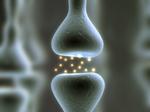
neurons

...While the basolateral amygdala (BLA) has been shown to mediate the reinforcing properties of drugs of abuse, it has also been shown to play an important role in affective and motivated behaviours and has been shown to undergo maladaptive changes in response to drugs of abuse and stress. Given the overlap in neural circuitry affected by drugs of abuse and sucrose, we sought to examine the effect of short- and long-term binge-like sucrose consumption on the morphology of the BLA principal neurons using an intermittent-access two-bottle choice paradigm. We used Golgi-Cox staining to impregnate principal neurons from the BLA of short- (4 week) and long-term (12 week) sucrose consuming adolescent rats and compared these to age-matched water controls. Our results indicate possibly maladaptive changes to the dendritic architecture of BLA principal neurons, particularly on apical dendrites following long-term sucrose consumption. Specifically, our results show reduced total dendritic arbor length of BLA principal neurons following short- and long-term sucrose consumption. Additionally, we found that long-term binge-like sucrose consumption caused a significant reduction in the length and complexity of apical dendrites. Taken together, our results highlight the differences between short- and long-term binge-like sucrose consumption on BLA principal neuron morphology and are suggestive of a perturbation in the diverse synaptic inputs to these neurons.

Read More
Your Last Diet!
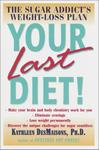
Your Last Diet Book Cover

I had someone ask me why I don't just tell people what to eat in order to lose weight. It really pushed me to think about what it is we are doing in YLD. The key concept is about LAST - this means the whole point is to get you to realize that diets are not the story. Diets = restriction which is simply one more way of taking away power. YLD is all about *empowerment* which means it is slow, thoughtful and transformative. It can be a little disorienting since it is so different from what you are used to.

Chats, chats, chats. We just keep talking, reflecting, learning. You will learn about fat terror, about the myths of obesity, how dieting fosters *restriction* and what that means for your long term success. We add new science to help you understand why you do what you do.

I’m in my third year of recovery and THIS year is the worst roller coaster of trying to balance my protein/sugar/mood swings. Was at wit’s end, wondering where could I find a doctor who knew addiction recovery AND nutrition when my sis sent me a blurb on your book. Went to bookstore and the words leapt off the cover at me! I KNEW it was more than just blood sugar; I had been doing food combining, protein in the a.m ., etc., for years, even before I quit drinking. You have saved my life and, more important, my peace of mind by filling in the blank spaces in my diet management. All I want is to feel normal after I eat! Even after I had the blood sugar thing down, I was still experiencing weird feelings, and there they were in the book: a column for beta-endorphin and one for serotonin! Thank you so much for giving me direction!! God bless you! I have been telling everyone about your book.

—M. S.

If you would like to join us in YLD, come find us here.
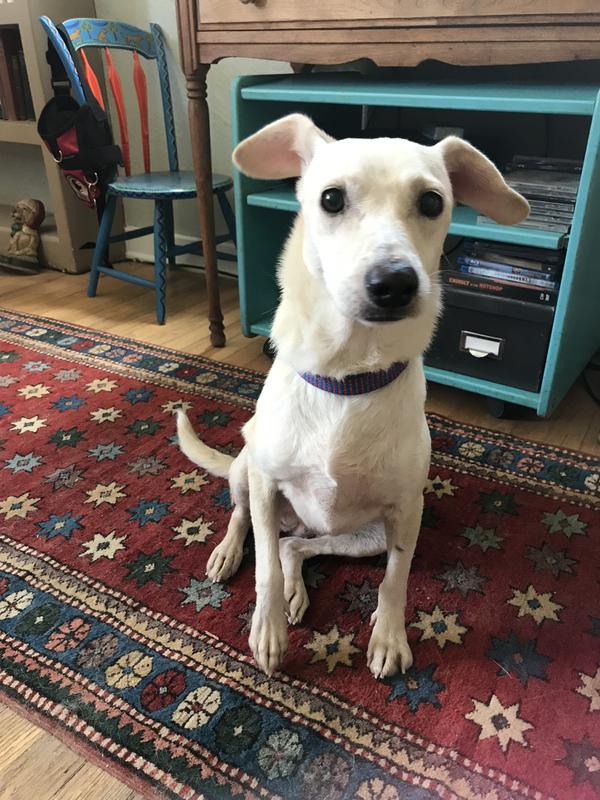
White dog with funny ears

Gaming Addiction

Kathleen DesMaisons, PhD

We are having a guest contributor this week. Some of you know about. my interest in gaming addiction. I have followed several discussions about this on Quora. Last week, a young woman provided an answer to the question:

How do you get a 15 year old to quit his gaming addiction and start doing better in school? Her answer about knocked my socks off, so I asked her if I might share it with you. She agreed so here it is,

I answered this on another thread for a fortnight addiction. Here’s how I successfully did it:

Ah, a Fortnite addiction. My son went through the exact same thing this time last year, only he was 15. He was making C’s and D’s, was obsessed with playing games online with his friends, and he had zero ambition.

So here’s what I did: I took him off cold-turkey. We had this very sweet super-fast 27 inch Mac, and I took it out of the home into my office, and gave him a slow computer.

Sure he screamed and we had major fights, but it was like weaning him off of breast feeding - they’re over it in about a week.

Then, I created distractions for him. He was sent to engineering day camp and to his grandmother’s. There they read Barack Obama’s autobiography together and for three weeks in the summer, they discussed what it meant to be a highly-effective individual. She gave him daily chores, was made to make his bed every morning, and they rarely brought out the computer. They watched TV, but only at night and only of movies.

When he came back, he suddenly started thinking about his future, his goals, and what kind of college he would like to go to. I did a hands-off approach in my parenting and allowed him to manage his work, once school began. He decided to join Student Council and that recently inspired him to run for Treasurer for next year. He won! And now as the semester is wrapping up, he has straight A’s in his classes.

The principal of his school recently stopped me and asked what I had done to help my son in his transformation. I said “nothing.” It was all up to him. He just needed a little guidance.

You can get your son off of Fortnite. Counseling is not a bad option, if you can make that happen.

But honestly, the most important thing I did was when I took the object of his affection away, I made sure to replace it with something just as interesting. Don’t concentrate on the addiction. Concentrate on the rewards he will get out of leaving.

Also, don’t be afraid to ask friends or family members for help with this. It truly takes a village. Yes it does!

Hope this helps!

EDIT: I realize that the timing on this was very convenient for me, as it was the beginning of summer of last year. And now here we are at the new school year.

Others have said, reward him with game time when he finishes his homework, but I say no. Get him a flimsy laptop where it sucks to play video games. Take the sweet fast gaming computer out of the house. He’ll cry for a week. He’ll still watch youtube, etc. but the gaming addiction will be gone. Then insist he get involved in a club at school. Something. One thing even. And then either read a biography with him, or choose documentaries of successful people to watch together out of the Netflix.

I realize every teenager is different, but I can tell you, rewarding him with game time after doing homework means he’ll sneak it in while you aren’t looking. And then more arguments. I tried that.

Kelly Belly

Here is the Annie Lane column that brought so many of you here.

Dear Annie: I read with interest the letter from "Weird, Stupid or Selfish?" – whose husband eats all the decorative candy she puts out. His inability to resist sugar resonated with me, as I have sugar sensitivity and have engaged in exactly the same behaviors. I simply could not resist sugar.

After years of struggling and dieting and sitting in work meetings obsessing about the doughnuts instead of the topic at hand, I discovered the book "Potatoes Not Prozac," by Kathleen DesMaisons. Her theory is that people who are sugar sensitive have brains that respond differently to sugar, alcohol and refined carbs and that what they eat and when they eat it have a huge effect on them. She shows how to rebalance blood sugar levels, serotonin and beta-endorphins through small lifestyle changes and offers the latest research, free online support and seven steps to change your life. It is not about willpower; it’s about biochemistry, which her program can slowly improve, just one tiny step at a time, with amazing results.

I have been sugar-free for six years now, lost 25 pounds and never gained any of it back. I can go to dinner with family and don’t even think twice when someone orders dessert. I don’t have cravings, and sugar is no longer on my radar. I am more focused and more tolerant, and the daily mood swings are gone. The woman who wrote to you could suggest to her husband that he check out http:// radiantrecovery.com to see whether he does have sugar sensitivity. At the very least, she would be better informed about this condition. – Happy Without Sugar

Dear Happy Without Sugar: I hadn’t considered that health issues might explain

her husband’s behavior. In fact, I hadn’t even heard of sugar sensitivity.

Thanks for opening my eyes to the condition! I’d like to encourage all readers to talk to their doctors if they find themselves compulsively eating sugary snacks.

—Email questions to dearannie@creators.com

ANNIE LANE

©2019 Kathleen DesMaisons. All rights reserved. You are free to use or transmit this article to your blog or website as long as you leave the content unaltered, use this attribution: "By Kathleen DesMaisons, Ph.D. of Radiant Recovery®", and notify kathleen@radiantrecovery.com of the location. Please visit the Radiant Recovery® website at for additional resources on sugar sensitivity and healing addiction.

You are getting the weekly newsletter from Radiant Recovery® in response to your signup.
A copy of this newsletter will also be found posted on the web.